

Key Takeaways
- Flexible office rentals empower businesses to scale up or down without long-term commitments.
- Shared and modular workspace designs reduce overhead while enhancing collaboration.
- Location, amenities, and technology infrastructure are critical factors that influence productivity and employee satisfaction.
- A reputable workspace provider ensures reliable support, smooth transitions, and long-term adaptability.
In today’s rapidly evolving business landscape, selecting an office space that enables your organization to adapt is a strategic advantage. As companies scale up, pivot, or navigate unpredictable changes, a workspace that can evolve with your needs is more than just desirable—it’s essential for growth and efficiency. Whether you’re a startup needing a short-term solution or an established business rethinking your long-term presence, flexibility in office rentals provides the breathing room organizations need to thrive. One approach that’s gaining popularity is desk sharing Braintree, MA, which offers a scalable workspace without the constraints of traditional leases.
Modern office rentals are a far cry from the one-size-fits-all agreements of the past. Landlords and workspace providers are now tailoring options to accommodate everything from hybrid workforces to on-demand meeting spaces. Understanding how to evaluate these offerings ensures your business isn’t stuck with costly excess or scrambling in times of expansion. In this guide, we’ll examine the major factors to consider as you navigate the flexibility of office rentals.
Understanding Lease Terms and Duration
The cornerstone of flexibility is the lease agreement itself. Traditional leases often require multi-year commitments, which can be a barrier if your needs are likely to change over time. Many businesses, aware of the risks associated with rigid leases, seek agreements with shorter durations, renewal options, or even monthly terms. According to a CBRE global survey, over half of the companies surveyed are actively implementing more flexible leasing strategies. This preference enables organizations to pivot quickly, seize new opportunities, or streamline costs as circumstances demand.
Assessing Space Scalability
Space scalability is a key component of an adaptable workplace. The ability to expand or contract your office footprint with minimal friction is crucial for organizations experiencing fluctuations in headcount. Many flexible office providers feature modular layouts and “pay-as-you-grow” plans, allowing teams to scale seamlessly. This can be particularly beneficial for companies with seasonal workforce changes or startups moving through rapid growth phases, ensuring you always have the right amount of space at the right time.
Evaluating Shared Amenities and Services
Modern office rentals often include access to shared amenities, such as conference rooms, lounges, fully equipped kitchens, and wellness facilities. These shared spaces not only foster collaboration but also reduce operational headaches and costs for tenants. Additionally, included services—ranging from front desk staff and security to mail handling and on-site IT support—can streamline your daily operations. When visiting potential office spaces, assess the quality, accessibility, and maintenance of these amenities and services, as they can significantly impact employee satisfaction and overall productivity.
Considering Location and Accessibility
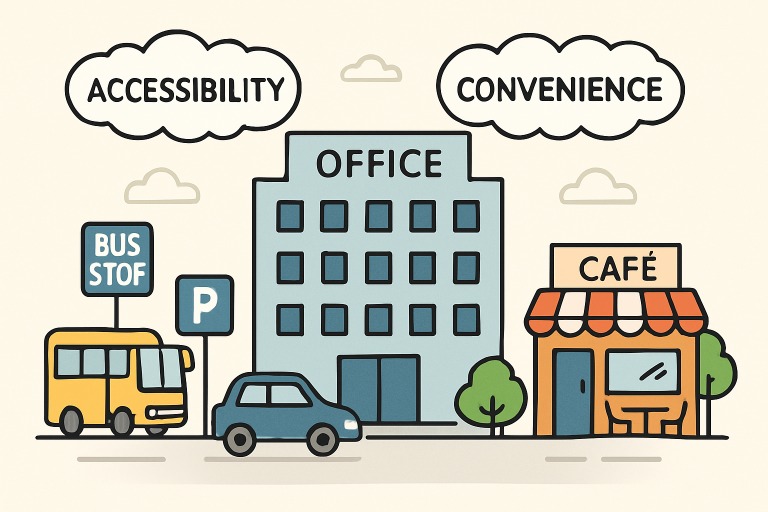
The geographic location of your office is deeply connected to both employee well-being and business success. Flexible office providers now offer options beyond city centers, allowing companies to establish their presence in locations that best suit their workforce and clients. Easy access to public transport, ample parking, and proximity to hospitality or retail amenities can markedly enhance the convenience and appeal of your workspace.
Analyzing Cost Implications
Cost analysis is another crucial aspect of evaluating flexible office rentals. While the per-square-foot price of flexible offices can be higher than that of traditional leases, the inclusivity of utilities, cleaning, maintenance, and shared resources often leads to more accurate budgeting and potential savings. Furthermore, flexibility eliminates the need for tying up capital in underutilized space or expensive build-outs. Before signing on, create a comprehensive side-by-side comparison of total monthly and annual costs, factoring in both tangible and hidden expenses.
Reviewing Technological Infrastructure
No flexible office solution is complete without a robust, secure technological backbone. Assess the reliability of high-speed internet, the availability of secure wired and wireless networks, and the quality of audiovisual and communication tools. Many providers now offer dedicated IT support, advanced security, and 24/7 professionally managed infrastructure—must-haves for teams that depend on seamless connectivity. The right technology setup prevents costly disruptions and future-proofs your workspace for growth or evolving business models.
Understanding the Provider’s Reputation
An office rental’s true flexibility often hinges on the reputation and reliability of its provider. Research online reviews, client testimonials, and industry case studies to gauge the provider’s track record related to customer service, maintenance response times, and flexibility during unexpected events. A reputable organization will be more proactive about accommodating your changing needs, and transparent communication can make all the difference in the day-to-day management of your space. High tenant satisfaction rates and positive feedback are good indicators that your business will be supported over the long term.
Final Thoughts
Selecting a flexible office space is an investment in your company’s future agility and resilience. By thoroughly assessing factors such as lease terms, space scalability, shared amenities, cost structures, technological readiness, location, and provider reputation, you’ll be well-equipped to choose an office that not only fits your operational needs today but can easily evolve with you. Embracing flexibility in your workspace strategy is more than just a trend—it’s a practical response to the ever-evolving demands of modern business.