

Key Takeaways
- Adjust lawn care routines to align with seasonal needs.
- Implement proper mowing, watering, and fertilization techniques to maintain a healthy lawn.
- Prepare your lawn for seasonal challenges, such as drought, pests, and cold temperatures.
Enjoying a vibrant, lush lawn all year long isn’t just about hard work; it’s about smart, seasonal adjustments. With each change in weather, your yard’s needs shift, making it essential to adapt your approach to yard care throughout the year. By understanding these seasonal nuances, you’ll be able to defend against common lawn issues, strengthen your grass, and keep your outdoor space a neighborhood highlight.
The key to a thriving lawn lies in embracing the rhythms of nature and proactively tending to your yard’s needs as temperatures rise, fall, and fluctuate. This means going beyond the basics—like mowing and watering—to thinking ahead and preparing your grass for everything each season can throw its way. Whether it’s awakening your turf after a long, cold winter or helping it withstand the scorching heat of midsummer, timely action produces lasting results. Even the healthiest lawns rely on smart strategies and proper timing, which is why learning the science behind every season of lawn care is essential for homeowners who want lasting results.
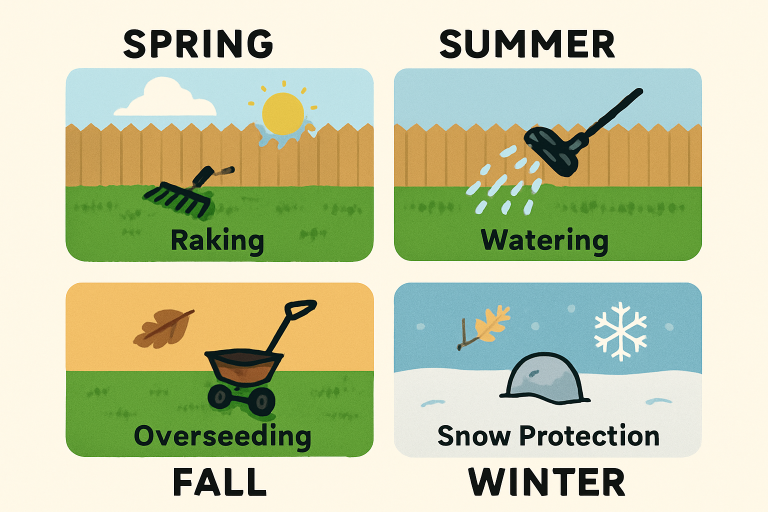
Spring: Awakening Your Lawn
Proper debris removal not only smooths the way for new shoots but also deters mold and improves airflow, setting the stage for effective lawn care.
1. Remove debris
Remove all debris—such as leaves, branches, and built-up thatch—to open up your yard for new growth. This primes your lawn for a strong start as temperatures warm, ensuring sunlight reaches the soil surface.
2. Soil Testing and Aeration
Testing your soil’s pH and nutrient levels is vital before applying any fertilizer. Soil compaction, especially common in high-traffic areas, can choke out growth and reduce water absorption. Aerating—whether using a manual or mechanical core aerator—improves nutrient uptake and root development, setting a solid stage for spring’s rapid growth.
3. Fertilization and Weed Control
Apply a slow-release fertilizer tailored to your test results, providing new grass with the essential nutrients it needs. Pre-emergent weed control should be applied before common weeds like crabgrass begin to germinate—typically when soil temperatures reach 55°F. This preventive strike limits weed invasion before it becomes a major hassle.
Summer: Protecting Against Heat and Drought
Summer brings intense heat and potential water shortages, making it the most challenging season for lawns to thrive. Deep and infrequent watering is the golden rule—watering too often encourages weak, shallow roots, while watering deeply (1 to 1.5 inches per week) builds strength for tough conditions. Always water in the early morning to avoid excess evaporation and reduce the risk of fungal disease.
1. Watering
Provide your lawn with consistent, deep soakings rather than frequent sprinkles. Early hours are ideal for watering to minimize moisture loss and prevent diseases that thrive in wet, warm conditions.
2. Mowing Height
Higher mowing, usually setting blades at three to four inches, provides soil-shading benefits, slows weed growth, and helps turf withstand drought. Ensure your mower blades are sharp for a clean cut, which greatly reduces grass stress during the summer’s extremes.
3. Pest Management
Watch out for pests like grubs, chinch bugs, and sod webworms—these critters thrive in hot weather and can quickly devastate a neglected lawn. Whenever possible, opt for integrated pest management strategies that utilize beneficial insects and targeted controls, thereby avoiding disruptions to pollinators and healthy soil life.
Fall: Strengthening for the Cold
Autumn’s cooler weather and mild rains give your lawn a chance to repair summer’s wear-and-tear and prepare for the upcoming winter. Start by overseeding—applying fresh grass seed to any thin or bare patches—which strengthens your turf’s density for a robust comeback after winter. Choose a cool-season seed blend if your region faces especially cold winters.
1. Overseeding
Target patchy or worn spots with quality grass seed. This increases lawn thickness and boosts resistance to weeds, pests, and disease once spring returns.
2. Fertilization
Fertilize in early fall with a product high in phosphorus to encourage root growth. This nutrient boost helps your grass store energy for winter dormancy and emerge stronger in spring.
3. Leaf Management
Don’t let fallen leaves smother your grass. Rake or mulch leaves regularly; mulching them with a mower breaks them down into organic matter, which naturally enriches your soil and improves texture.
Winter: Protecting Your Dormant Lawn
Winter is a time of rest for your lawn, but a little care now ensures a strong, healthy lawn next season. Prioritize a final short mowing—set your mower to 2–2.5 inches—to prevent snow matting and reduce the risk of disease. Clearing out toys, furniture, and other clutter before snow falls protects delicate turf from damage.
1. Final Mowing
Cut your grass to its shortest recommended height for the last mow. Short blades resist matting and minimize fungal problems beneath the snow.
2. Fertilization
Feed your lawn with a winterizing fertilizer rich in potassium before the ground freezes. Potassium fortifies cell walls, increasing your grass’s ability to withstand freezing temperatures and recover in spring.
3. Snow Damage Prevention
Mark lawn edges with snow stakes and use salt-free or pet-safe deicers near turf. Salt-heavy products can burn grass, leaving dead patches after the snow thaws.
Common Lawn Care Mistakes to Avoid
Even well-intentioned homeowners can harm their lawns through common mistakes. Here’s how to steer clear:
- Mowing Too Short: Short cutting weakens the roots, leaving your grass open to pests and diseases. Stick to the “one-third rule”—never remove more than a third of the blade at once.
- Neglecting Aeration: Compacted soil starves roots of oxygen and water. Annual aeration improves these conditions, especially in clay soils or high-traffic areas.
- Improper Watering: Frequent, light watering keeps roots shallow and the surface prone to fungal growth. Aim for deep, less frequent irrigation.
- Weed Control Mistakes: Applying pre-emergent herbicides too late serves little purpose; timing is everything for stopping weeds like crabgrass before they germinate.
- Overfertilizing: Applying too much fertilizer can damage your lawn and contaminate groundwater. Follow soil test recommendations and always use measured applications.
Conclusion
Year-round lawn success depends on tailoring your approach to each season’s demands. By mastering the art of seasonal timing—mowing, fertilizing, watering, and preventing pests and disease—you’ll enjoy a resilient, eye-catching yard in every season. Attention to detail today yields outdoor beauty you can enjoy for years to come.